



 Article source:
 Nov 24, 2026
Baby skin is naturally delicate and requires gentle, consistent care from the earliest days of life. Compared with adult skin, newborn skin can be more sensitive to environmental changes, moisture loss, friction, and unsuitable personal care ingredients. Dryness, rough patches, and temporary redness are common concerns that encourage parents to pay closer attention to the products used in their baby's daily skincare routine.
Among the many products available, baby massage oil serves more than one purpose. It helps nourish dry skin, improve skin softness, and provide a smooth surface for gentle massage. When formulated with skin-conditioning oils and moisturizing ingredients, it can also support the skin barrier and help reduce moisture loss.
Beyond skincare, baby massage is an opportunity for parents to build a closer connection with their children through gentle touch. A comfortable massage routine may help babies relax, settle down, and enjoy a calmer bedtime experience.
However, not all massage oils are formulated in the same way. Ingredient selection, texture, absorption, and skin compatibility all influence the overall experience. Understanding these factors can help parents choose a suitable product and help personal care brands develop more targeted baby skincare solutions.
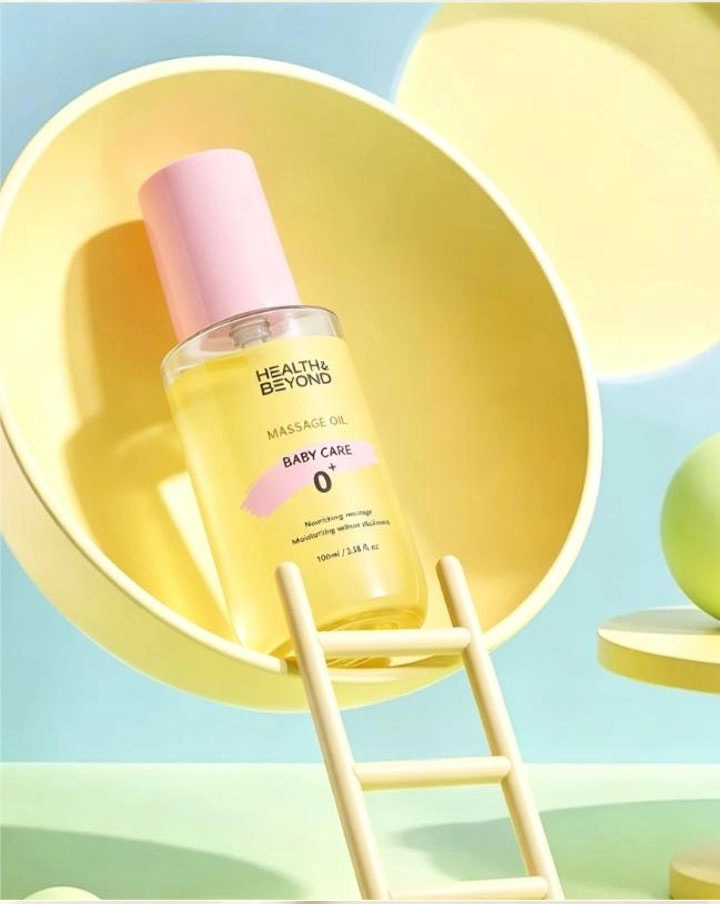
Health&Beyond's baby massage oil combines jojoba oil, squalane, avocado oil, and shea butter in an anhydrous formula designed to nourish delicate skin, support moisture retention, and provide a smooth texture for everyday massage and moisturizing care.
Why Is Baby Massage Oil Important for Daily Baby Skincare?
A baby's skin needs protection from moisture loss and external environmental factors. Everyday activities such as bathing, changing clothes, and exposure to dry air can affect skin comfort. Although gentle cleansing and moisturizing lotions are important parts of baby skincare, an oil-based product offers a different approach to conditioning the skin.
Baby massage oil works by forming a nourishing layer on the skin's surface. This layer helps reduce moisture loss while improving softness and smoothness. Unlike water-based lotions, anhydrous oil formulas do not rely on water as their main base. Instead, they use oils and emollients to provide direct conditioning benefits.
There are several reasons why parents may include a gentle baby massage oil in their daily care routine.
1. Helps Nourish Dry and Delicate Skin
Dry skin can feel rough, tight, or uncomfortable. Babies may develop dry areas on their arms, legs, abdomen, and other parts of the body, particularly when environmental humidity is low.
A nourishing oil blend can help soften these areas and improve the skin's overall feel. Ingredients such as avocado oil and shea butter provide emollient care, helping condition rough skin and reduce the feeling of dryness.
2. Supports the Skin's Natural Moisture Barrier
The skin barrier plays an important role in maintaining hydration and protecting against external irritants. When the skin loses moisture too quickly, it may become dry and more susceptible to discomfort.
A moisturizing baby massage oil can help support moisture retention by leaving a conditioning layer on the skin. Squalane and jojoba oil are particularly useful ingredients in this type of formulation because their lipid-like properties make them suitable for skin-conditioning applications.
3. Provides a Smooth Surface for Massage
Massage involves repeated, gentle movements across the skin. Without sufficient lubrication, friction may make the experience less comfortable.
The smooth texture of baby body massage oil helps hands glide more easily over the skin. This makes it easier for parents to perform gentle massage movements without unnecessary pulling or rubbing.
4. Encourages Relaxation and Parent-Child Bonding
Baby massage is not only about skincare. It also provides an opportunity for parents to interact with their babies through calm, attentive touch.
A quiet massage routine may help babies settle and relax, especially when incorporated into a consistent bedtime schedule. The physical contact also creates a meaningful opportunity for parent-child bonding.
Massage should always be gentle and responsive to the baby's reactions. It is not a treatment for sleep problems or medical discomfort, but it can form part of a comfortable daily care routine.
What Are the Key Ingredients in a High-Quality Baby Massage Oil?
Ingredient selection is one of the most important considerations when developing a baby massage oil. Because baby skin requires careful handling, the formula should focus on skin compatibility, moisturizing performance, and a comfortable application experience.
A well-balanced oil blend may combine lightweight emollients with richer nourishing ingredients. This helps deliver moisture and softness without making the skin feel excessively greasy.
Health&Beyond's formula features four key ingredients: jojoba oil, squalane, avocado oil, and shea butter. Each contributes a different function to the overall skincare experience.
1. Jojoba Oil: Lightweight Moisturizing and Skin Conditioning
Jojoba oil is widely used in personal care products because of its distinctive composition. Technically, it is a liquid wax ester rather than a conventional triglyceride oil. Its properties are similar in some respects to components of the skin's natural surface lipids.
It is valued for its lightweight feel and ability to help condition the skin without leaving an excessively heavy finish.
In baby massage oil, jojoba oil offers several formulation benefits:
Helps soften and condition dry skin.
Provides lubrication for gentle massage.
Contributes to a smooth, lightweight application texture.
Helps improve the skin's overall softness.
Its relatively light texture makes it useful in formulations intended for full-body application. When combined with richer emollients, it can also help balance the sensory feel of the finished product.
2. Squalane: Supporting Moisture Retention and Skin Barrier Care
Squalane is a stable emollient commonly used in modern skincare formulations. It is valued for its smooth texture, good spreadability, and compatibility with many types of skincare ingredients.
It helps soften the skin and reduce moisture loss by providing an emollient layer on the skin's surface. Its lipid-like characteristics also make it a useful ingredient in products designed to support the skin barrier.
For delicate baby skin, squalane contributes to a comfortable moisturizing experience without necessarily making the formula feel overly heavy.
In a baby skin massage oil, it can help:
Improve skin softness and smoothness.
Support moisture retention.
Enhance the spreadability of the oil blend.
Complement other nourishing ingredients.
Its inclusion is particularly relevant when developing an oil-based product that needs to balance moisturizing performance with a pleasant, lightweight finish.
3. Avocado Oil: Deep Nourishment for Dry Skin
Avocado oil is a plant-derived emollient rich in fatty acids and other naturally occurring components. It is commonly used in skincare products designed for dry and rough skin because of its nourishing properties.
Compared with lighter oils, avocado oil can provide a richer conditioning feel. It helps soften the skin and improve its smoothness, making it a valuable ingredient in formulations intended for intensive moisturizing care.
In baby skincare, avocado oil can help address concerns such as:
Dry or rough skin texture.
Reduced skin softness.
Moisture loss after bathing.
The need for additional emollient care.
When combined with jojoba oil and squalane, avocado oil contributes a richer nourishing element to the formula while the other ingredients help improve its overall texture and application experience.
4. Shea Butter: Rich Moisturizing and Softening Care
Shea butter is a widely recognized emollient in personal care products. It contains fatty acids and other naturally occurring components that help soften and condition the skin.
Its richer texture makes it particularly useful in formulations designed for dry areas that need additional moisturizing support.
In an oil-based baby care formula, shea butter helps provide:
Intensive emollient conditioning.
Improved softness for rough skin.
Support for moisture retention.
A smoother skin feel after application.
The combination of shea butter with lighter ingredients helps create a more balanced texture. This is important because a baby massage oil should provide sufficient nourishment while remaining comfortable to spread across the skin.
How Does an Anhydrous Formula Benefit Baby Skin?
An anhydrous formula is a product formulation that does not use water as an ingredient in its base. In skincare, this approach is often used for oil-based products, balms, and certain concentrated treatments.
Baby massage oil uses this type of formulation to deliver conditioning ingredients directly through an oil-based blend.
1. Focuses on Oil-Soluble Conditioning Ingredients
Because the formula is water-free, its ingredient system can focus on oils and emollients that help soften the skin and reduce moisture loss.
Jojoba oil, squalane, avocado oil, and shea butter each contribute different sensory and conditioning properties. Their combination creates a nourishing blend designed for massage and targeted moisturizing applications.
2. Helps Reduce Moisture Loss
Oil-based products can leave a conditioning layer on the skin. This layer helps slow down water loss from the skin's surface, making it useful for areas that tend to become dry.
However, an oil does not replace water-based hydration. For skin that needs additional moisture, parents may use a suitable moisturizer as part of a broader skincare routine, following product instructions and professional advice where necessary.
3. Provides a Smooth Application Experience
A good massage oil should spread evenly without requiring excessive rubbing. The combination of lightweight and richer emollients helps create a texture suitable for massage movements.
The sensory experience matters because parents need to apply the product comfortably while ensuring that the baby's skin is handled gently.
4. Requires Careful Formula and Packaging Design
Water-free does not automatically mean that a product is sterile, irritation-free, or suitable for every newborn. Raw material quality, manufacturing hygiene, formula stability, and packaging compatibility remain important considerations.
For manufacturers, anhydrous baby skincare products require careful attention to oxidation stability, ingredient purity, and suitable packaging. These factors help maintain product quality throughout its intended shelf life.
How to Use Baby Massage Oil for Different Skincare Needs
One advantage of a versatile baby massage oil is that it can be used in different ways depending on the baby's skin condition and the product's instructions.
Parents should always follow the manufacturer's age guidance and usage directions. For newborns, especially during the first few weeks, it is advisable to consult a healthcare professional before introducing new skincare products.
1. Full-Body Baby Massage
Full-body massage is one of the most common applications.
A simple routine can help parents incorporate gentle touch into everyday care:
Choose a warm, comfortable environment without strong drafts.
Make sure the baby is calm, awake, and receptive to touch.
Place a small amount of oil in clean hands and rub them together to distribute it.
Use gentle strokes on suitable areas such as the legs, arms, and back.
Observe the baby's reactions and stop if there are signs of discomfort.
Avoid applying excessive pressure or massaging areas where the baby has broken, irritated, or inflamed skin. Parents should also avoid applying oil to the hands if the baby is likely to put them in their mouth.
2. Targeted Care for Dry Areas
Some areas of the body may become drier than others. A small amount of nourishing oil can help soften rough patches on areas such as the legs or arms.
Jojoba oil, avocado oil, and shea butter provide complementary emollient properties that help improve skin softness.
However, persistent redness, scaling, cracking, or itching may indicate a skin condition that requires professional assessment. Massage oil should not be used as a substitute for appropriate treatment.
3. Moisturizing Care After Bathing
Bathing can temporarily affect the skin's moisture balance, particularly when water is hot or the bath lasts too long.
After bathing, gently pat the baby's skin dry. If the product is suitable for the baby's age and skin condition, a small amount of baby massage oil can be applied according to the label instructions.
Avoid using excessive quantities, as too much oil may leave the skin slippery and make handling the baby more difficult.
4. Gentle Facial Care
Some oil-based products are marketed for use on both the body and face. However, facial application requires additional care because the area around the eyes, nose, and mouth is particularly sensitive.
Only use the product on the face if its label specifically allows this application. Avoid the eyes, nostrils, mouth, and any areas with active irritation.
What Should Parents Consider When Choosing a Baby Massage Oil?
The market offers many types of baby skincare oils, but choosing the right one requires more than comparing ingredient lists or packaging claims.
Parents should consider the following factors before selecting a product.
1. Ingredient Quality and Formula Simplicity
Look for clearly identified ingredients and a formula designed with the intended age group in mind. Products for newborns and babies should be developed with particular attention to raw material quality and skin compatibility.
A formula containing jojoba oil, squalane, avocado oil, and shea butter provides several complementary moisturizing and conditioning functions. However, ingredient presence alone does not guarantee suitability for every baby.
2. Texture and Absorption
A massage oil should spread easily and provide enough lubrication for gentle movements. A formula that feels excessively sticky or heavy may be less convenient for everyday use.
Lightweight ingredients such as jojoba oil and squalane can help balance richer components such as avocado oil and shea butter.
3. Skin Compatibility and Safety Testing
Parents should pay attention to age recommendations, usage instructions, and relevant product testing information.
For products intended for newborns, manufacturers should conduct appropriate safety assessments and support their claims with relevant testing. A product described as gentle or non-irritating should still be evaluated through suitable testing rather than relying on ingredient reputation alone.
It is also important to remember that natural ingredients can still cause reactions in some individuals. Parents should discontinue use if irritation occurs.
4. Packaging and Product Hygiene
Packaging influences how conveniently and hygienically a product can be used. A well-designed dispensing system can help control the amount of oil applied and reduce unnecessary contact with the remaining product.
For oil-based formulations, packaging materials should also be evaluated for compatibility with the formula and its storage requirements.
How Can Baby Massage Support Relaxation and Parent-Child Bonding?
Baby massage is often included in bedtime and daily care routines because it creates a quiet opportunity for parents and babies to interact.
Gentle, consistent touch can help babies feel secure and comfortable. When performed in a calm environment, massage may also support relaxation before sleep.
Creating a Calming Routine
A regular massage routine can become a familiar part of the baby's day. Parents may choose to perform it after bathing or before bedtime, provided the baby is alert and comfortable.
A warm room, gentle movements, and a relaxed atmosphere are more important than the length of the massage. Even a short session can provide an opportunity for interaction.
Encouraging Parent-Child Interaction
Massage allows parents to pay close attention to the baby's facial expressions, movements, and responses. This can help parents become more familiar with the baby's comfort signals.
Using a suitable baby massage oil can make the movements smoother and more comfortable, while the gentle physical contact supports a positive bonding experience.
Following the Baby's Cues
Not every baby enjoys massage at every moment. If the baby becomes unsettled, turns away, cries, or shows other signs of discomfort, parents should stop and try again at another time.
Massage should be a comfortable interaction rather than a fixed task that must be completed every day.
Health&Beyond: Developing Nourishing Baby Skincare Solutions
As parents become more attentive to ingredient quality and product functionality, the demand for specialized baby skincare continues to create opportunities for personal care brands. Products are expected to offer more than basic moisturization. They need to combine appropriate formulation design, comfortable application, and clear product positioning.
Health&Beyond's Baby Massage Oil is developed around an anhydrous oil-based formula featuring jojoba oil, squalane, avocado oil, and shea butter. The combination focuses on nourishing dry skin, improving softness, supporting moisture retention, and providing a smooth texture for massage.
Its multi-purpose positioning makes it suitable for brands exploring baby massage products, moisturizing oils, and broader baby body care collections. The formula is designed to support full-body massage and targeted moisturizing applications, subject to the final product's age guidance and usage instructions.
As a personal care supplier offering OEM and ODM solutions, Health&Beyond works with brands seeking to develop and expand their skincare and personal care portfolios. From ingredient selection and formula development to product customization, the company focuses on creating solutions that align with different market needs and brand positioning.
For brands planning to enter or expand in the baby skincare category, a thoughtfully developed massage oil can provide a valuable addition to a comprehensive product range. With its combination of lightweight and nourishing emollients, Health&Beyond's Baby Massage Oil offers a formula concept centered on gentle conditioning, daily moisturizing, and comfortable parent-child massage experiences.
 Previous news




 WhatsApp