



 Article source:
 Aug 25, 2026
As consumers become more selective about their skincare routines, the demand for targeted facial serum products continues to grow. Instead of choosing one product for every skin concern, consumers increasingly prefer formulas designed around specific needs such as hydration, brightening, skin barrier care, visible signs of aging, soothing, and blemish-prone skin.
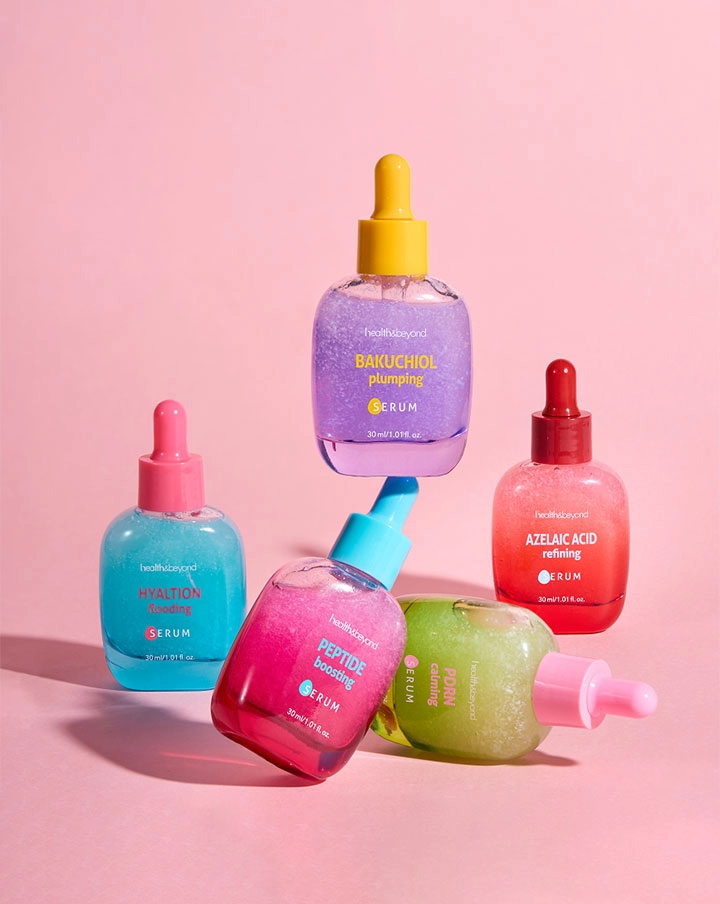
To meet these changing market needs, Health&Beyond has introduced its Particle Essence Series, a collection of targeted facial skincare formulas developed for modern beauty brands seeking flexible OEM, ODM, and private label solutions.
The collection brings together six different skincare concepts, allowing brands to build a more complete facial serum portfolio while offering consumers targeted options for different skincare concerns.
Why Facial Serum Has Become an Important Skincare Category
Facial serum occupies a unique position between basic skincare and highly targeted treatment products. Compared with traditional creams or lotions, serums are often positioned around concentrated active ingredients and specific skin concerns.
This makes the category particularly attractive to consumers who want a more customized skincare routine.
For example, someone concerned about dehydration may prefer a hyaluronic acid serum, while another consumer may prioritize dullness and uneven-looking skin and choose a vitamin C-based formula. Consumers concerned about the appearance of fine lines may be more interested in peptide skincare, while those with blemish-prone skin may look for formulas containing azelaic acid.
The result is a market in which different serum concepts can coexist rather than compete directly with one another.
For skincare brands, this means that developing a complete facial serum collection can be more effective than launching several products with nearly identical positioning. Each formula can have its own role while contributing to a unified brand story.
1. Peptide Serum for Firming and Barrier-Focused Skincare
Peptides have become an important ingredient category in modern anti-aging skincare. Instead of presenting a peptide facial serum simply as an “anti-aging product,” brands can build a broader positioning around firmness, skin conditioning, hydration, and barrier support.
The PEPTIDE Boosting Serum follows this more comprehensive approach.
Its formulation concept combines multidimensional peptides with repair lipids and 4D hyaluronic acid. This creates an opportunity for brands to position the product around several complementary consumer interests rather than focusing on one claim.
This type of formula may work particularly well for brands targeting mature consumers or consumers beginning to incorporate more advanced skincare into their routines.
From a marketing perspective, a peptide serum can also become an important product within a premium skincare range because consumers often associate peptides with sophisticated formulation technology and targeted skincare.
2. Vitamin Serum for a Brighter-Looking Complexion
Dull-looking skin and uneven-looking tone remain common skincare concerns across different consumer groups. This makes brightening products a natural component of many facial skincare collections.
The VITAMIN Illuminating Serum is positioned around these needs through a combination of dual-action vitamin C, niacinamide, and plant-based antioxidants.
Vitamin C is widely recognized by consumers, making it a familiar ingredient for brands that want an easily understandable product story. Niacinamide provides another recognizable ingredient that can support a broader brightening and skin-conditioning positioning.
However, the key to developing a successful vitamin C facial serum is not simply putting “vitamin C” on the label. Brands need to consider the overall formula concept, sensory experience, packaging, stability requirements, and target market.
A well-designed illuminating serum should fit naturally into a daily skincare routine rather than appearing as an isolated treatment product.
3. PDRN Serum for Soothing and Skin Recovery Positioning
PDRN has attracted increasing attention within modern skincare because of its association with skin-conditioning and recovery-focused formulations.
The PDRN Calming Serum in the Particle Essence Series takes a soothing-oriented approach, combining PDRN with botanical soothing extracts.
This gives brands an alternative to traditional brightening or anti-aging serum positioning. Instead, the product can be incorporated into skincare routines centered on comfort, hydration, and skin recovery.
This type of positioning can be particularly relevant for consumers who prefer gentle skincare concepts or brands that emphasize maintaining healthy-looking skin rather than aggressive treatment.
For private label skincare brands, a PDRN-based formula can also provide a way to differentiate a product portfolio while responding to consumer interest in newer skincare ingredients.
4. Hyaluronic Acid Serum for Everyday Hydration
Hydration is one of the most universal skincare needs, which makes a hyaluronic acid serum an important product for many facial skincare collections.
The HYALTION Flooding Serum is designed around intensive hydration, skin barrier support, and soothing. Its formulation concept combines multi-layer hyaluronic acid with Centella asiatica and barrier lipids.
The advantage of a multi-dimensional hydration concept is that it moves beyond the simple idea of “adding moisture.” Modern consumers often understand that maintaining a comfortable skin barrier is also important for the overall appearance and feel of the skin.
For a skincare brand, this type of product can serve as a foundational serum that appeals to a broad audience.
It can also work well alongside more targeted products. For example, a consumer might use a brightening serum in one part of a routine and a hydrating serum when additional moisture support is needed.
5. Azelaic Acid Serum for Blemish-Prone Skin
A skincare collection designed for a broad international audience should also consider consumers dealing with blemishes, excess oil, or uneven-looking skin.
The AZELAIC ACID Refining Serum is positioned for this segment. Its formula concept includes azelaic acid, prebiotics, postbiotics, and botanical extracts.
Azelaic acid is particularly interesting from a product development perspective because it can support a skincare story that combines refining and skin-conditioning benefits.
Adding prebiotics and postbiotics to the formulation concept also reflects the growing interest in maintaining a balanced skin environment.
For brands, this creates an opportunity to develop a facial serum that feels more sophisticated than a conventional blemish-focused product. Instead of relying on an overly aggressive treatment image, the product can be positioned around refining the appearance of skin while supporting a balanced skincare routine.
Why Formula Differentiation Matters for Skincare Brands
Launching several serums at the same time does not automatically create a strong product range.
If every product has similar ingredients, claims, packaging, and target consumers, customers may have difficulty understanding which product is right for them.
Effective differentiation begins with the consumer problem.
A brand might organize its serum collection around questions such as:
- Does the consumer want more hydration?
- Is the primary concern dull-looking skin?
- Is the consumer interested in firming and anti-aging care?
- Does the consumer need a calming product?
- Is the skin prone to blemishes?
- Does the consumer want a daily barrier-focused product?
This approach creates a logical relationship between products.
Instead of selling six unrelated formulas, a brand can create a skincare system in which every facial serum has a clear purpose.
Texture and Sensory Experience Are Also Important
Ingredients are only one part of a successful serum.
Consumers also evaluate how a product feels during application. A facial serum that feels sticky, heavy, pills under makeup, or absorbs poorly may receive negative feedback even when its ingredient profile looks impressive.
For this reason, texture and sensory tuning should be considered during product development.
Different markets may also have different preferences. Some consumers prefer lightweight, fast-absorbing textures, while others associate richer textures with intensive skincare.
Private label and OEM/ODM manufacturers can help brands adjust these characteristics according to their target market.
For example, a brand targeting a lightweight daily skincare routine may prioritize a fluid serum texture, while a premium night-care product could adopt a more substantial sensory profile.
The goal is not to create one universally “perfect” texture. It is to create a sensory experience that matches the product's positioning and intended consumer.
Packaging Is Part of the Product Strategy
A facial serum is a highly visual skincare product. Packaging influences first impressions, perceived value, shelf appeal, and online presentation.
Bottle design, material selection, labels, logo placement, and secondary packaging should therefore be considered together with the formula.
A premium anti-aging serum, for example, may require a completely different visual language from a botanical calming serum.
At the same time, maintaining a consistent packaging architecture across an entire collection can help consumers recognize that the products belong to the same brand family.
For brands developing a collection such as the Particle Essence Series, this balance between individual product identity and overall collection consistency is especially important.
Why OEM/ODM Manufacturing Can Help Brands Build a Serum Collection
Developing skincare products internally can require considerable time, formulation knowledge, packaging resources, testing, sourcing, and production management.
This is one reason why OEM and ODM manufacturing has become an important route for emerging and established skincare brands.
An experienced facial serum manufacturer can support multiple stages of development, including formula customization, ingredient selection, texture adjustment, packaging development, label design, and production.
For brands, this can simplify the process of turning a product concept into a commercial skincare line.
Private label manufacturing offers another approach. Instead of developing every element from the beginning, brands can select an existing formula concept and customize the branding, packaging, and other appropriate elements according to their market strategy.
This can be particularly useful when a company wants to test a new skincare category or expand its existing product portfolio.
How to Choose the Right Facial Serum Manufacturer
Choosing a manufacturer should involve more than comparing unit prices.
Brands should evaluate the manufacturer's ability to support product development from concept to finished product.
Several factors deserve attention.
Formula Development Capabilities
The manufacturer should understand modern active ingredients and be able to develop formulas around specific consumer needs.
Customization Options
Look for flexibility in formula customization, texture, packaging, labeling, and branding. This is particularly important for brands that want products with a distinct market position.
Quality Management
Quality control should cover raw materials, production processes, packaging, finished products, and consistency between batches.
Production Capacity
A supplier may be suitable for small initial orders but unable to support larger volumes later. Brands should therefore consider both current and future production requirements.
Supply Chain Support
Reliable sourcing and production coordination can reduce delays and help brands maintain consistent product availability.
Regulatory and Market Requirements
Different markets have different cosmetic regulations and labeling requirements. Manufacturers with experience serving international markets can help brands navigate these requirements more effectively.
Building a Balanced Facial Serum Product Line
A strong skincare portfolio does not necessarily need dozens of products.
A smaller collection with clearly differentiated purposes can be easier for consumers to understand and easier for brands to market.
For example, a brand could structure its initial facial serum range around four major consumer needs:
Hydration: A hyaluronic acid-based serum for everyday moisture support.
Brightening: A vitamin C and niacinamide serum for dull-looking skin.
Firming: A peptide serum for consumers focused on visible signs of aging.
Refining: An azelaic acid serum for blemish-prone and uneven-looking skin.
A calming PDRN serum could then expand the collection toward consumers who prioritize soothing and recovery-focused skincare.
This type of product architecture gives each formula a clear role while allowing customers to build personalized routines.
Conclusion
The growing demand for targeted skincare is giving brands new opportunities to rethink how they build their facial serum collections. Instead of relying on a single all-purpose product, brands can create a more meaningful skincare range by offering formulas that address different consumer priorities—from hydration and brightening to firming, soothing, and skin refining.
The Particle Essence Series is built around this idea, bringing together six complementary product concepts that can be developed into a cohesive skincare portfolio. For brands, this approach makes it easier to create a product line with clear differentiation while giving consumers more freedom to choose products that fit their individual skincare routines.
As a professional skincare manufacturer, Health&Beyond provides OEM, ODM, and private label solutions that help brands move from product ideas to finished skincare products. With the right combination of formulation, customization, packaging, and manufacturing support, brands can build a facial serum range that reflects their identity, responds to market demand, and has room to grow with their business.
 Previous news


 WhatsApp